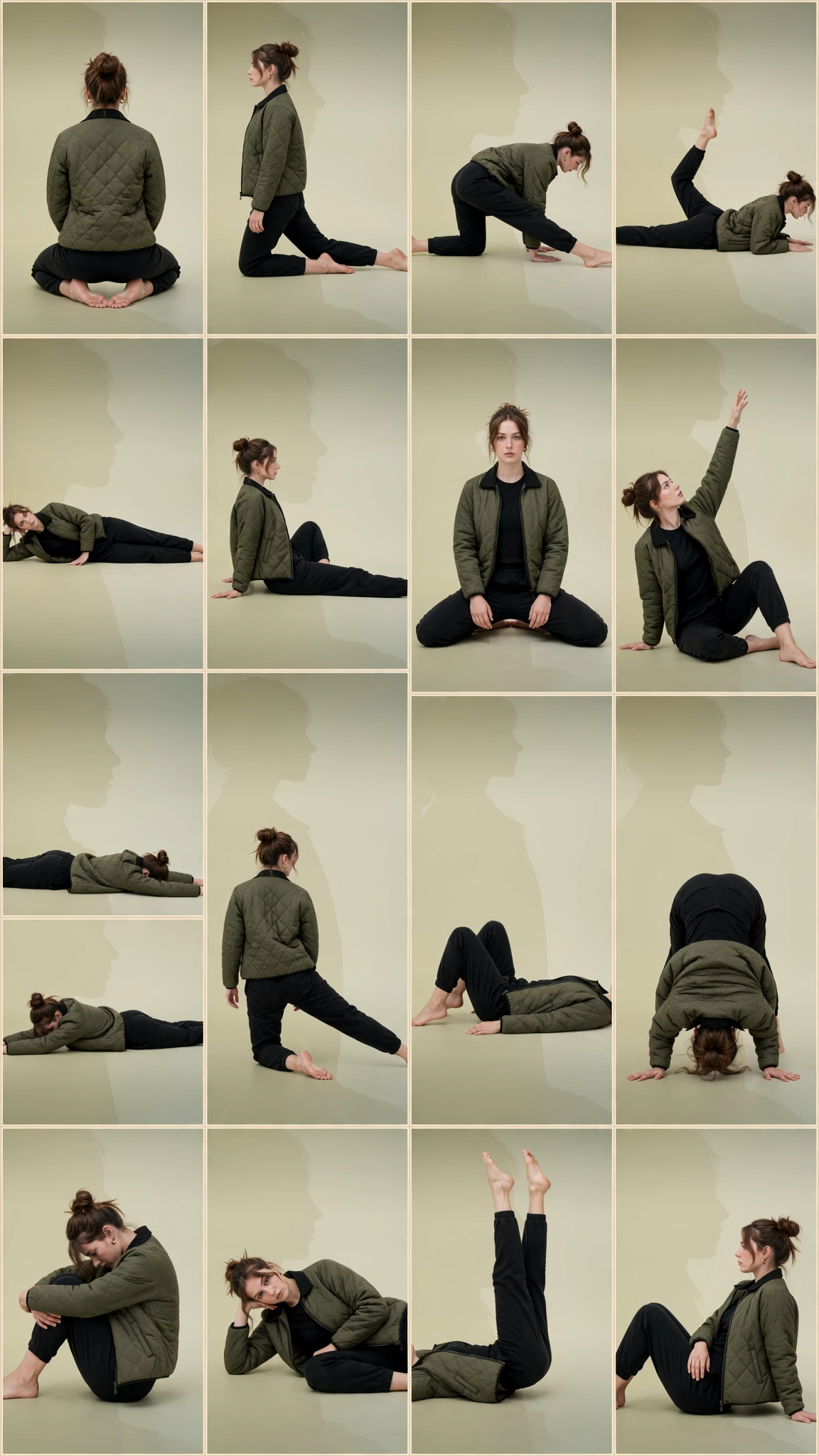
16-grid pose chart × Editorial portrait photography × Subject: [XXX] Generate 1 complete 9:16 vertical 4×4 person pose chart containing 16 independent frames.
Prompt 全文
16-grid pose chart × Editorial portrait photography × Subject: [XXX]
Generate 1 complete 9:16 vertical 4×4 person pose chart containing 16 independent frames.
Highest priority: The body structure in the 16 grids must strictly correspond to poses 01 to 16. Differences cannot be created merely through camera angle, person orientation, expression, or cropping; differences must come from body structure. Each grid must use different body support, leg, or torso structures.
- Subject Consistency
Keep the same subject's identity, appearance, body type, hairstyle, hair color, clothing, accessories, and core visual features consistent across all 16 grids. Hair, clothing hems, and folds may change naturally with the pose. The subject is always the primary visual subject. Subject identity, clothing, and visual features must not drift due to pose changes.
- 16 Poses
01 Rear kneeling pose: Both knees on the ground, hips close to heels backward, body facing away from camera, upper body upright, forming a clear rear silhouette.
02 Side extended-leg kneeling pose: Both knees on the ground, one leg extended to the side of the body, the other leg bent, upper body upright, forming clear side leg lines.
03 Four-point diagonal kneeling pose: Hands and knees on the ground forming clear four-point support, body in clear diagonal structure, one leg extended to the front side.
04 Prone single-leg raised pose: Body fully prone, upper body supported by forearms, one leg bent and raised backward and upward, the other leg extended.
05 Pure side-lying extended-leg pose: Body fully side-lying, one arm supporting upper body, both legs extended along the body direction, forming a clear pure side silhouette.
06 Side-sitting back-supported extended-leg pose: Sitting, one leg extended forward, the other leg bent and drawn in, body leaning backward, one hand supporting weight behind the body.
07 Front open kneeling pose: Both knees on the ground, body facing the camera, both legs widely spread left and right, hands placed naturally.
08 Single-arm raised sitting pose: Sitting, one leg bent and drawn in, the other leg naturally extended, one hand extended upward, the other hand supporting or balancing the body.
09 Prone forward-reaching pose: Body fully prone, both legs extended backward, both arms fully stretched forward, forming clear depth direction.
10 Rear side-kneeling extended-leg pose: Body facing away or side-away from camera, both knees on the ground, one leg fully extended to the rear side of the body, upper body upright.
11 Supine bent-knee pose: Body fully supine, back on the ground, both knees bent upward, feet close to the ground, head and shoulders remaining on the ground.
12 Extremely low rear four-point pose: Hands and feet on the ground, hips clearly raised, body forming a compact inverted-V structure, high-hip low-body four-point structure, viewed from low rear angle.
13 Sitting hugging-legs pose: Sitting, both legs drawn forward and crossed, both arms hugging the legs, upper body slightly contracted forward.
14 Side-lying head-supported bent-leg pose: Body fully side-lying, one hand supporting the head, both legs bent and drawn toward the body simultaneously.
15 Supine raised-leg pose: Body fully supine, both legs clearly lifted off the ground and bent upward, forming prominent longitudinal leg structure.
16 Back-supported side-sitting folded-leg pose: Sitting, both legs fully drawn in and folded to one side of the body, body clearly leaning backward, one hand supporting behind, the other hand placed naturally, forming a compact side silhouette.
The 16 poses must have clear body structure differences and strictly follow 01 to 16 without swapping, repeating, or omitting.
- Grid Composition
Strict arrangement:
01 02 03 04
05 06 07 08
09 10 11 12
13 14 15 16
Each grid shows only one complete subject in the corresponding pose. Unified editorial portrait photography language, person scale, clothing system, and background logic. The person is fully framed, with clear body structure, hands, feet, knees, elbows, and support relationships. Clear boundaries between grids, no overlapping, no grid bleeding, no pose swapping, no omission, no repetition.
- Background System
Extract main color and neighboring colors from the subject's clothing, hair color, representative color, and visual identity (maximum two core hues). Generate a low-saturation, low-contrast minimal gradient background.
Use only large areas of pure color and slow gradients. Do not add environment, props, texture, complex lighting, or decorative elements.
All 16 grids share the same gradient logic, remaining unified, clean, continuous, and retaining large negative space. The background must not form a specific scene.
- Hidden Visual Across the 16 Grids
Treat the 16 backgrounds as one continuous large gradient plane.
Fixed hidden visual: the subject's own low-contrast 45-degree side-face silhouette.
Generate the silhouette based on the current subject's facial features, hairstyle, and core visual characteristics. Integrate it into the background with extremely weak light-dark variation and continuously split it into 16 segments that naturally connect in the 4×4 layout.
The hidden silhouette uses only the current subject's features and does not introduce other people. Keep it low-contrast, low-saturation, and weakly visible, existing only in the background negative space.
Only show abstract continuous light-dark forms; do not present specific facial features such as eyes, nose, or mouth.
A single grid only shows partial light-dark forms; the complete side face can only be recognized when viewing the full 4×4.
Must not cover the subject, interfere with poses, add extra people, form a second subject, or produce a watermark effect. The hidden silhouette must not become an independent face.
- Visual Hierarchy
First layer: Subject and the 16 poses.
Second layer: Minimal low-saturation gradient background.
Third layer: Continuous hidden visual across the 16 grids.
Subject clarity takes priority over background continuity; background continuity takes priority over the hidden visual.
- Final Output
Generate only 1 complete 9:16 vertical image containing an internal 4×4 grid of 16 independent person frames.
Strictly execute poses 01 to 16 without omission or repetition.
Do not add titles, explanatory text, logos, magazine layout text, or any other layout text.
Each grid is a complete, clear editorial portrait pose image; the whole forms a unified 16-grid with the subject's 45-degree side-face silhouette hidden in the background composed of the 16 grids.
相关提示词
 免费
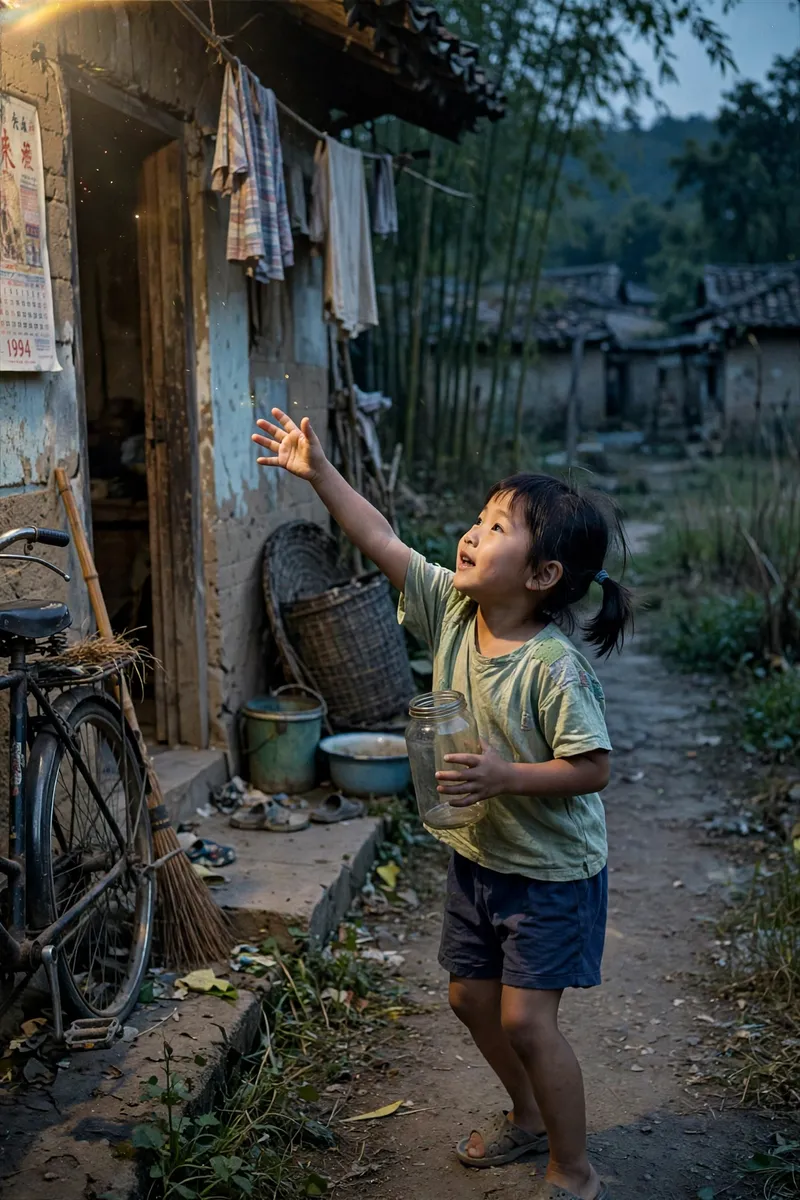
免费GPT Image 2.5 1990s Family Snapshot
A 1990s Chinese family snapshot aesthetic, color film, candid and unposed. Theme: a rural childhood moment of a child catching fireflies at dusk beside a village path. 135 film look with natural grain, slight exposure accidents, and imperfect framing.
 免费
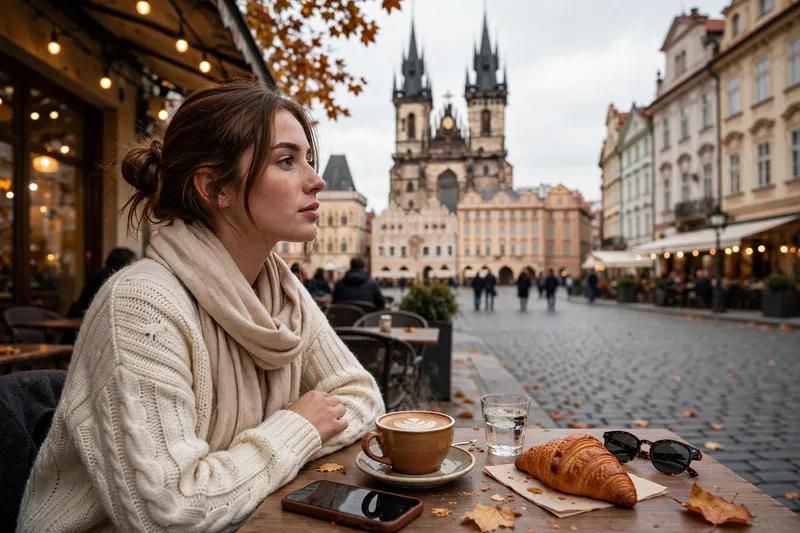
免费GPT Image 2.5 Prague Autumn Cafe
Create an ultra-realistic cinematic travel photograph of a fictional young adult woman, character name Sofia Maren, sitting at an outdoor cafe in Prague Old Town Square during autumn. She wears a cozy cream knitted sweater with a soft beige scarf.
GPT Image 2.5 Teal-and-Orange Cinematic Portrait
Hyper-realistic IMAX-level cinematic teal-and-orange indoor portrait, 9:16 vertical, of a fictional adult woman, character name Mara Ellison. Loose black cropped sweatshirt and light blue high-waisted ripped jeans with natural tears at both knees.
 免费
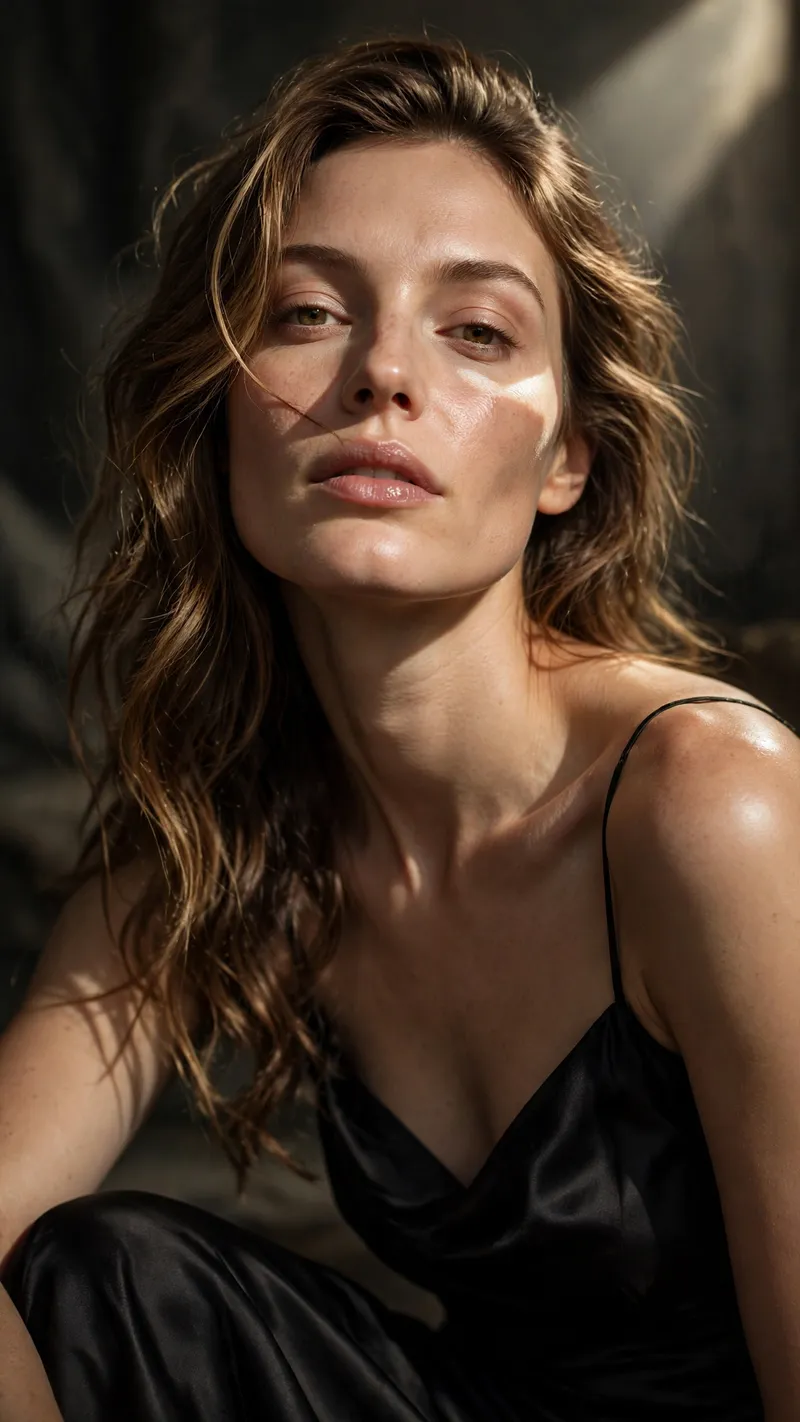
免费GPT Image 2.5 Black Silk Editorial
Create a hyper-realistic cinematic 8K fashion portrait with the polished look of a high-end Vogue editorial. Fictional adult woman, character name Clara Voss, seated in a relaxed composed posture, upper body leaning slightly toward the camera.